Your workout is planned. The warm-up still feels like a separate assignment.
You do not need to collect ten more exercises before you begin. Start with the preparation your session calls for, then rehearse the first familiar movement before its working sets.
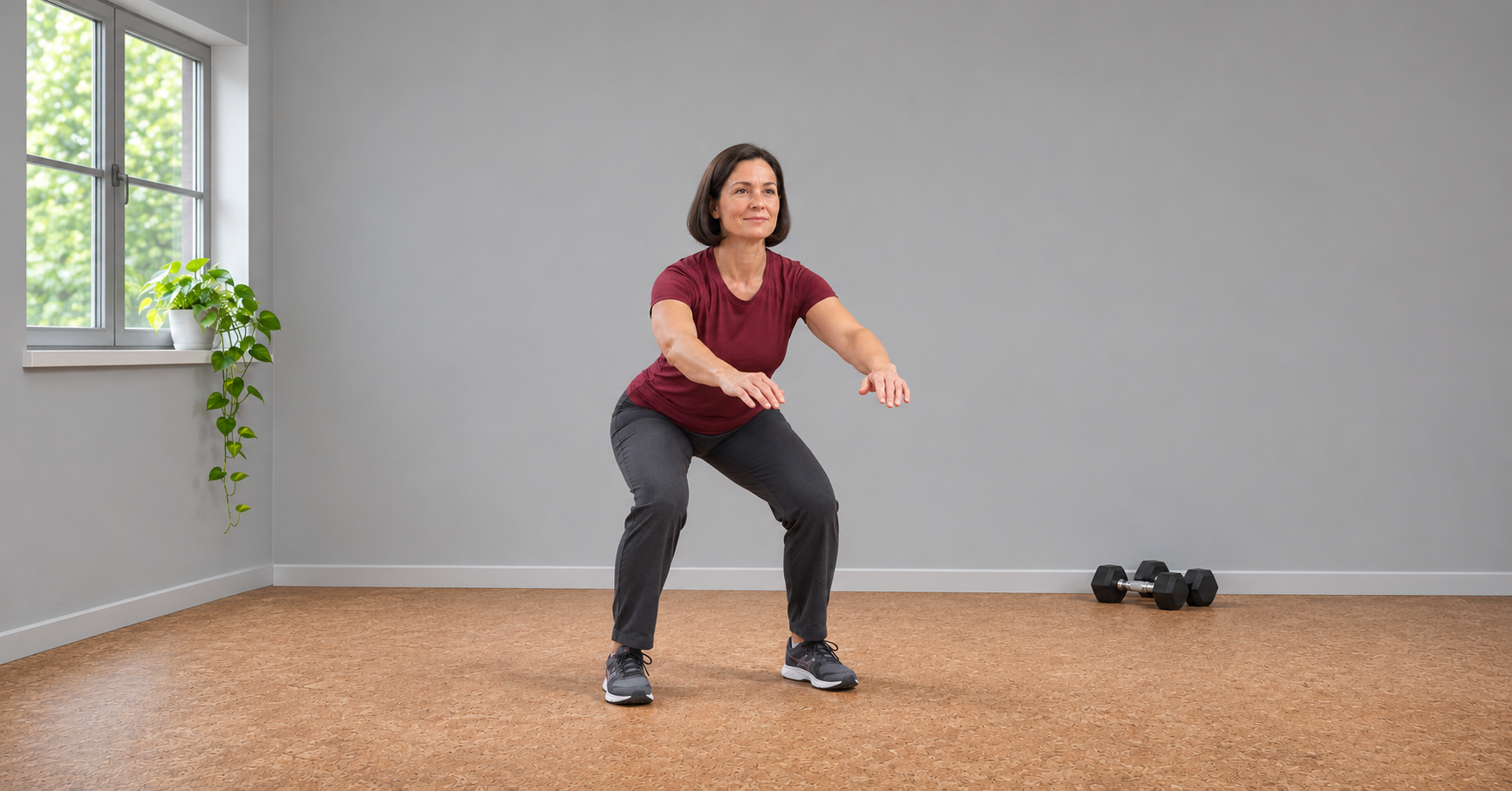
A useful coaching question is, “What are you getting ready to do?” It is more specific than “Have you warmed up?” A walk around the room and a rehearsal of a planned squat serve different parts of that answer.
This guide helps you organize preparation for exercises you already know. It is not a new workout or a way to learn an unfamiliar lift from a checklist. Keep a routine you enjoy, and use instruction when you are unsure about a movement.
Choose your starting point in under a minute
Following a class or written program?
Use its warm-up and planned sequence. If you arrive late to a live class, tell the instructor you missed the preparation before joining the work already underway. Ask where to begin instead of copying the class's current weight or pace.
Doing familiar exercises on your own?
Identify the first exercise in your plan. Keep your usual appropriate general preparation, then choose a familiar, easier rehearsal of that movement. Write that choice beside the exercise so tomorrow's session does not start with another search.
Unsure how the first exercise should feel or look?
Get instruction before loading it. Repeating an unfamiliar movement at a lighter weight does not automatically teach the technique.
If choosing the first working exercise is the unresolved part, the exercise-order guide addresses that decision separately.
Give general and specific preparation different jobs
The National Strength and Conditioning Association describes a general warm-up followed by less intense movements resembling the activity ahead. The aim is a gradual transition without undue fatigue. It also distinguishes preparation for activity from stretching primarily intended to develop flexibility.
For general movement, think of an easy, familiar start rather than a challenge. The NHS warm-up guide, for example, uses marching, heel digs and shoulder rolls in a routine lasting at least six minutes. That is one published routine, not a universal timer for every strength session.
For specific preparation, turn attention to the exercise you will actually use. NSCA's discussion of time-efficient training includes exercise-specific warm-ups. The practical distinction is simple: getting generally moving does not answer every question about the first planned lift.
Do not turn the clock into the goal
Finishing a fixed number of minutes does not prove you are ready for any weight. Follow the preparation in your program and ask your instructor how it should change when the exercise or planned load changes. This guide does not prescribe warm-up percentages or a heavy-lifting progression.
Match the rehearsal to the first familiar movement
These are examples of matching, not a required exercise list. Use a variation you have already learned and can control.
- A squat is first: an unloaded version of that familiar squat may be part of its rehearsal. You do not need to add a new squat variation simply because it appears in a warm-up video.
- A dumbbell press is first: ask how to rehearse the same planned press with a suitable lighter load. A lower-body-only preparation does not practice the pressing movement.
- A bodyweight movement is first: a familiar easier variation may be useful when your plan calls for it. “No weights” does not automatically mean the movement is easy.
Keep the intended exercise clear when choosing a variation. The bodyweight and weights guide explains how setup and adjustable resistance affect that choice.
Do not use the warm-up to test a personal best. If you are already tired from the preparation, discuss the amount and intensity with your instructor. Stop an exercise that causes pain or makes you feel unwell, and seek appropriate professional guidance.
Prepare for the exercise you intend to do, not for every exercise you have ever seen.
Keep preparation when the day changes
- Plan A: follow the full familiar session, including its planned warm-up.
- Plan B: if the session must shrink, ask which working exercises or optional extras can wait. Keep suitable preparation for the work that remains.
- Rescue option: if you cannot fit the preparation and planned work, choose another familiar activity or move the strength session. A short walk can count as movement without being labeled a completed strength workout.
- After an interruption: tell the instructor how long you stopped and what you last completed. Ask where to resume rather than assuming you should jump into the next working set.
- After a missed day: return to your planned routine when appropriate. Do not add extra warm-up work as a penalty or cram two sessions together.
The minimum useful planning step is to identify your first familiar exercise and its preparation. Writing that down counts as preparation for your next decision, not as completing today's workout.
Record what you used, any change of variation, and what you need clarified. A useful progress signal is being able to repeat the same preparation with control and less uncertainty. More sweat or a longer warm-up is not the goal.
Put the main work in order
Once you know how you will prepare, decide what comes next. The exercise-order guide helps you give the important work a clear place in your session and choose what can wait when time changes.
Read the Exercise-Order GuideWarm-up questions
How should I warm up before strength training?
Follow your program's warm-up when it provides one. Otherwise, use appropriate general preparation and a familiar, easier rehearsal of the first planned movement. Ask an instructor when the exercise or suitable preparation is unclear.
Is five minutes enough before lifting weights?
There is no single timer that establishes readiness for every exercise and load. Use the preparation your program calls for rather than treating five minutes as an automatic pass to begin the working sets.
Is stretching the same as warming up?
No. A warm-up prepares you for the activity ahead. Stretching primarily aims to develop flexibility. A program may include both, but a stretching routine does not automatically replace preparation for the planned strength movement.
What if I miss the warm-up in a live class?
Tell the instructor before joining the current work. Ask where to begin and what preparation you need instead of copying the weight or pace of people who started earlier.