Think about the last hill you walked down. Did you slow down because you were catching your breath, because each step took more attention, or because you were tired of carrying the pack?
That answer helps you choose what to practice at home. Keep the hikes you enjoy and pick one strength focus that has a clear job on the trail.
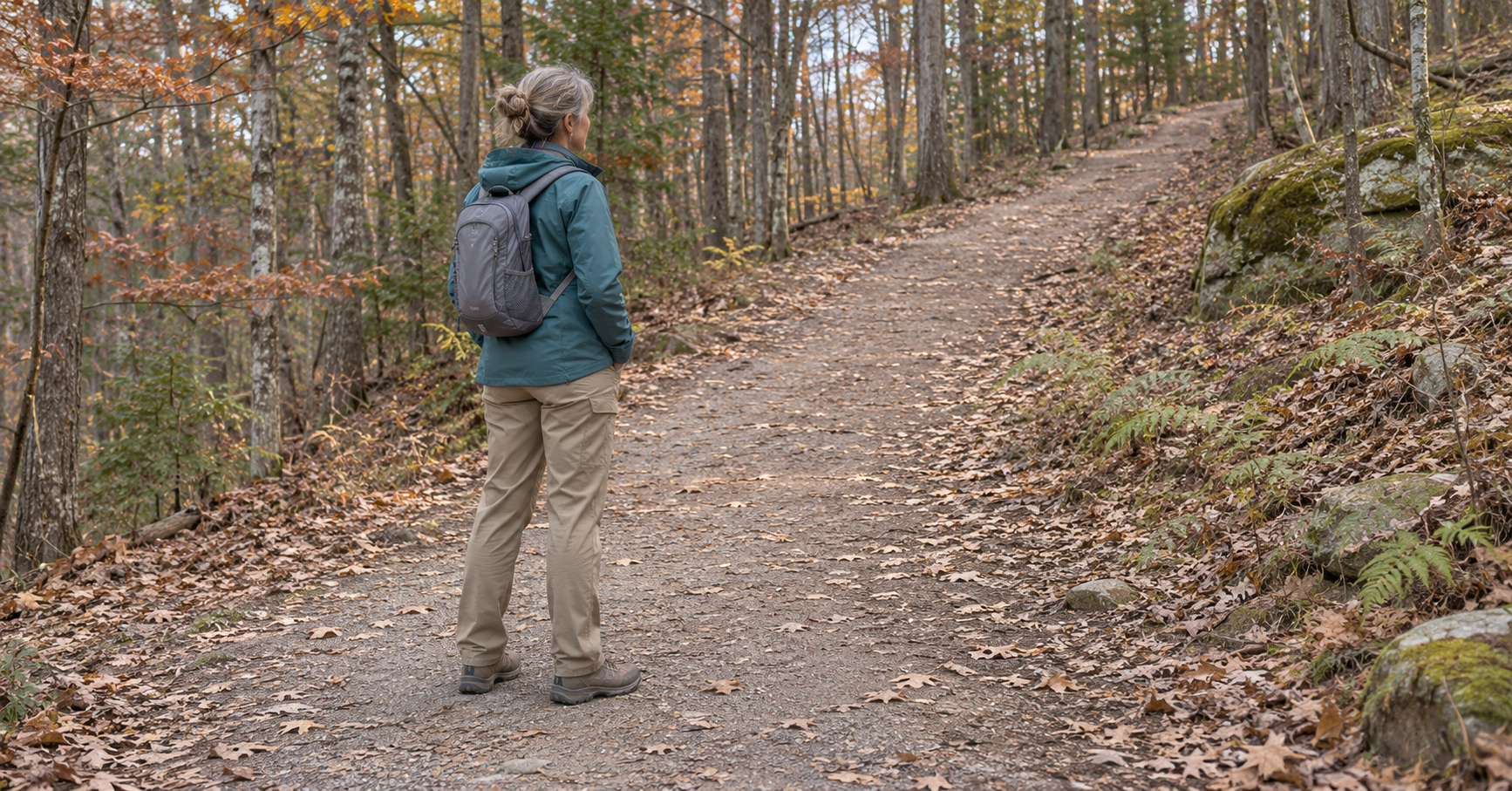
When I help someone decide what to train, I start with where the workout needs to help. For a hiker, an easy forest loop, repeated hills, and a longer outing with a loaded daypack have different demands. You can use a route you already know to make that choice.
Start with a hike you already know
Think of an outing you could repeat without changing your usual gear. Where did you start paying more attention to the work? Pick one moment: a climb where your legs tired, a long descent where you stopped moving as smoothly, or a stretch where the pack bothered you. If breathing or overall time on your feet was the limiting factor, keep building familiarity with manageable hikes and your usual walking routine.
The Washington Trails Association’s conditioning guide recommends combining actual hiking with supporting work. The Appalachian Mountain Club’s home workout guide also distinguishes what you can practice on the trail from the strength work you can do at home. Use the trail to learn how you handle the route, and your strength sessions to give a particular movement some attention.
Choose the part of the trail to practice for
Climbing: Choose one movement that asks you to push up
If your legs worked hardest on the uphill sections, choose a familiar sit to stand or a low step-up with stable support that is already part of your routine. You can repeat the same movement in the same setup and give it your attention before deciding if it needs to get harder.
Your next action: Write down the movement and the setup you can repeat. Keep actual hill practice on a route you can manage at a comfortable pace.
Descending: Pay attention to the return
If longer descents are where you lose your rhythm, spend time on the lowering part of a familiar movement. In a sit to stand, that might mean returning to a sturdy chair with control. You can keep the same movement and practice in the same setup before trying a more challenging version.
Your next action: Choose one familiar exercise where you can tell whether the lowering phase stays controlled. Keep your route choices within the footing and grade you already handle well.
Carrying: Check the pack before increasing the load
If the pack was what you noticed first, check what you carried and how it sat. A short familiar walk with your usual essentials gives you a way to evaluate the setup. If you change the strap fit or carry a different load, make a note so you know what changed.
Your next action: Start with the gear and route you actually use. If you already have a familiar carry in a strength session, you can use that to practice steady walking with an appropriate load in a clear space.
The American College of Sports Medicine’s resistance training guidance puts regular participation and a program you can follow ahead of a complicated setup. Home strength can use bodyweight, bands, or weights. Choose the option you already know how to handle with control.
Pick the trail moment you want to make more manageable. Give one exercise a clear reason to be in your week.
Fit the strength work around the hike you want to keep
Restart, Build, or Challenge
Restart: If strength work has been inconsistent, choose one familiar movement and give it a place in your next planned session.
Build: If you already strength train regularly, keep your usual sessions and choose one movement to repeat in the same setup for a few weeks.
Challenge: If that movement and your usual hike both feel manageable, decide whether to change one thing next, such as the exercise variation or the route grade. Keep the other pieces familiar so you can tell what changed.
Plan A: Keep your planned outing and put the strength focus inside your regular workout. If you know you prefer fresh legs for a longer weekend route, give the tougher strength work its own space earlier in the week.
Plan B: If your week gets crowded, use the shorter version of a familiar workout and choose a manageable route when you can get outside.
Rescue: Write one line: “Next session I’ll practice ___ because on the trail I noticed ___.” A useful decision is a good minimum for a busy day.
Missed a day? Use the next planned session to resume. Keep that session at a size you can finish comfortably.
What to write down next time
Record the trail section or movement, what you carried, and what made you slow down or change how you moved. Compare a similar outing before drawing a conclusion. In your workout, record the exercise and setup so you can compare like with like. The workout log guide shows what to keep in that note.
Give that choice a place in your week
Once you know what to practice, choose strength days that fit around the walks and hikes you already want to keep. This guide gives you a starting point for two, three, or four days, plus an option for a busy week.
Choose Your Strength Training DaysFrequently asked questions
Do hikes count as strength training?
Hikes give you practice on actual grades, surfaces and distances. A separate strength session lets you repeat a controlled movement and adjust the challenge in a predictable setting. If you already hike, keep trail time alongside any useful strength work.
What strength exercises are useful for hiking?
Start with the part of your route you want to support. A familiar sit to stand or low step-up can fit an uphill focus. A controlled lowering movement can fit a descent focus. For pack comfort, start by checking fit and practicing with the gear you normally carry.
Can I train for hiking at home?
Yes. Familiar bodyweight exercises, resistance bands or weights can all be options for strength work at home. Use a clear floor and stable support when needed. Keep hiking on routes that match your current ability so you can practice the terrain itself.
Should I make my pack heavier for training?
Start with the pack and gear you actually use. Check the fit and distribution first. If the route or pack feels unfamiliar, spend time with a manageable version before changing distance, grade or gear load.