Is Walking Enough Exercise? What It Covers and What Strength Training Adds
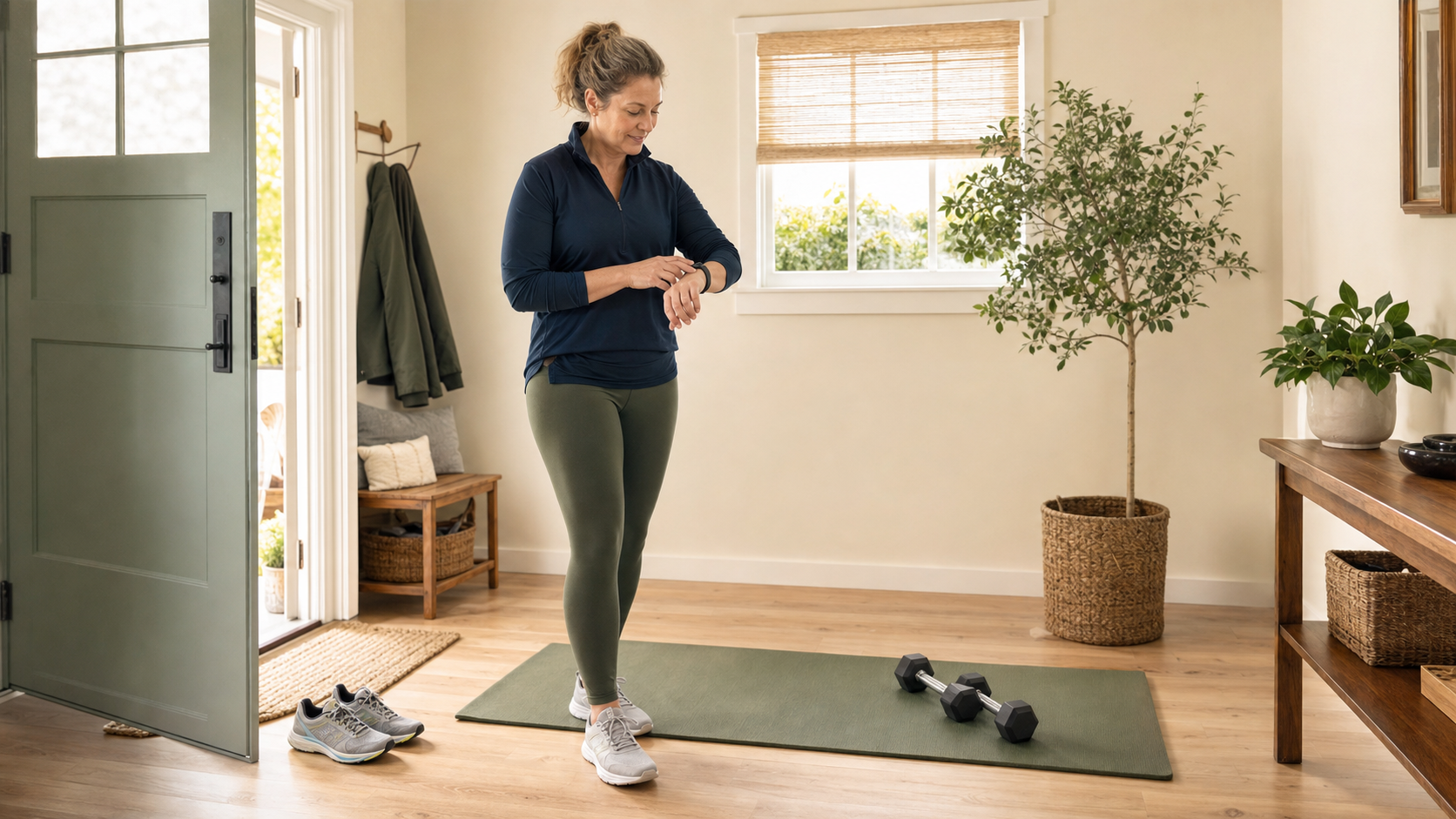
I hear this question all the time: "I walk almost every day. Is that enough?"
The honest answer is that walking is real exercise, and it is worth protecting. It gets you moving, builds endurance, gives you time outside, and can be one of the easiest routines to repeat. I would never tell someone to throw away an activity she enjoys just because it is not the entire plan.
But walking and strength training do different jobs. If you want to feel stronger carrying groceries, getting off the floor, climbing stairs, traveling, or keeping up with the rest of your life, your week needs some resistance too. The solution is not replacing your walks. It is adding the smallest useful amount of strength work beside them.
What Walking Already Covers
Walking gives you several things that matter. Your heart and lungs work. Your legs repeat a steady pattern. You spend more time moving instead of sitting. A faster pace, hills, and longer routes can make that work more demanding.
Walking can also be the activity that holds the rest of your plan together. It can be an easier recovery day between strength sessions, a chance to clear your head, or a way to stay active when you do not have the time or energy for a full workout.
The exact value depends on how you walk. A relaxed ten-minute walk and a long hilly walk are not the same demand, but both count. You do not need to call every walk a workout for the movement to matter.
What Walking Usually Does Not Cover
Your body adapts to what you repeatedly ask it to do. Walking asks you to move your body forward, mostly through the same range and at the same level of resistance. That is useful, but it is not the same as progressively challenging your muscles.
This is why someone can walk several miles and still feel unsure lifting a heavy bag, getting up from the floor, or controlling a lunge. It does not mean the walking failed. It means those tasks require a different kind of practice.
Our article on what strength training actually does explains the benefits in more detail. The decision here is simpler: keep your walks, then add a repeatable dose of resistance training.
You do not need to choose between being a walker and getting stronger. Your best plan can make room for both.
Choose the Right Strength Starting Point
Do not pick the plan that looks most impressive. Pick the one you can repeat for four weeks without fighting your schedule every time.
Restart
Choose this if strength training is new, it has been a while, or your week already feels full.
Start with: Two 10 to 15 minute sessions each week.
Build
Choose this if you know the basic movements and can protect two workout appointments.
Start with: Two 20 to 30 minute sessions each week.
Challenge
Choose this if you already strength train consistently and recover well between sessions.
Start with: Three 25 to 40 minute sessions each week.
Restart is not a punishment, and Challenge is not a better person. They are entry points. The right one is the level that gives you enough challenge to improve and enough recovery to come back.
If you are brand new, the first 30 days beginner guide gives you a broader starting framework. If you already know the movements, stay with the plan below.
Put Walking and Strength Into the Same Week
You do not need a perfect calendar. You need one normal plan and one backup.
Plan A: The normal week
- Monday: Regular walk
- Tuesday: Full-body strength
- Wednesday: Regular walk
- Thursday: Easier walk or rest
- Friday: Full-body strength
- Weekend: One walk you enjoy, with one open recovery day
Plan B: The busy week
Complete one normal strength session and one 12-minute circuit. Keep your walks where they naturally fit. A shortened session still counts.
The five-minute rescue
Complete one controlled round of chair squats, incline push-ups, a band or dumbbell row, and glute bridges. Stop with enough control to know you could repeat the movements safely.
If you miss a strength day, move it to the next open day. Do not double the next workout and do not restart the entire week. One disrupted day is a schedule problem, not a character problem.
A Simple Full-Body Strength Session for Walkers
This is a movement framework, not a medical or rehabilitation plan. Choose versions you can perform comfortably and with control.
- Squat or supported lunge: 8 to 12 controlled repetitions.
- Hip hinge or glute bridge: 8 to 12 controlled repetitions.
- Incline push-up or dumbbell press: 6 to 12 controlled repetitions.
- Band or dumbbell row: 8 to 12 controlled repetitions on each side.
- Suitcase carry or standing hold: 20 to 40 seconds on each side.
- Dead bug or another controlled core exercise: 6 to 10 repetitions on each side.
Complete one to three rounds based on your starting point. Rest enough to keep the next set controlled. When all the repetitions feel steady for several sessions, add a small amount of resistance, add a repetition, or choose a slightly harder variation. Change one thing at a time.
How to know the plan is working
- You complete the planned strength sessions more often than you skip them.
- Your repetitions look and feel more controlled.
- You can use a little more resistance without losing form.
- Everyday lifting feels more confident.
- Your regular walk feels steady even when the route or pace changes.
Those signals matter more than a single scale reading. Progress is your ability to do useful work and repeat it.
Three Mistakes to Avoid
1. Turning every walk into a hard workout
You need easier movement too. If every walk becomes a speed test, your legs may feel tired when it is time to strength train. Let some walks stay easy.
2. Adding too much strength work at once
A seven-day plan is not useful if you stop after one week. Start with two sessions you can recover from and repeat.
3. Waiting for the perfect schedule
The schedule will change. Build the backup before you need it. That is how consistency survives a busy week. Our guide on what actually keeps you consistent explains why the system matters more than another burst of motivation.
Add Strength Without Giving Up Your Walks
The free Stronger Week Quick Start gives you one short strength workout, a simple weekly plan, and a backup when the week changes.
Get the Free Quick StartFree PDF. No credit card required.
Frequently Asked Questions
Yes. Walking is useful physical activity and can improve endurance, cardiovascular fitness, and the amount of movement in your day. It counts. The question is not whether walking matters. The question is whether it covers every result you want.
Walking can be enough for a movement goal, but it usually does not provide the progressive resistance needed to build strength across the whole body. If strength, muscle, bone-loading exercise, or easier everyday lifting matters to you, add a simple strength plan while keeping your walks.
Two useful full-body strength sessions per week are a practical starting point for many people. Begin with a length and difficulty you can repeat. Add time, repetitions, or resistance only after the current plan feels controlled and recoverable.
Yes. You can walk before or after a strength session, or separate them by several hours. Keep the walk easier when the strength workout is demanding. Choose the order that lets you perform the priority session with good control.
A balanced plan includes a squat or lunge, a hip hinge or bridge, a push, a pull, a carry, and controlled core work. The exact exercise should match your experience, available equipment, and ability to perform it comfortably.