You have a few minutes between tasks. What should those minutes do?
A movement break can interrupt a long stretch at your desk. A planned workout has a different job. Exercise snacks sit in the conversation between them, but the name alone tells you very little about the effort or training involved.
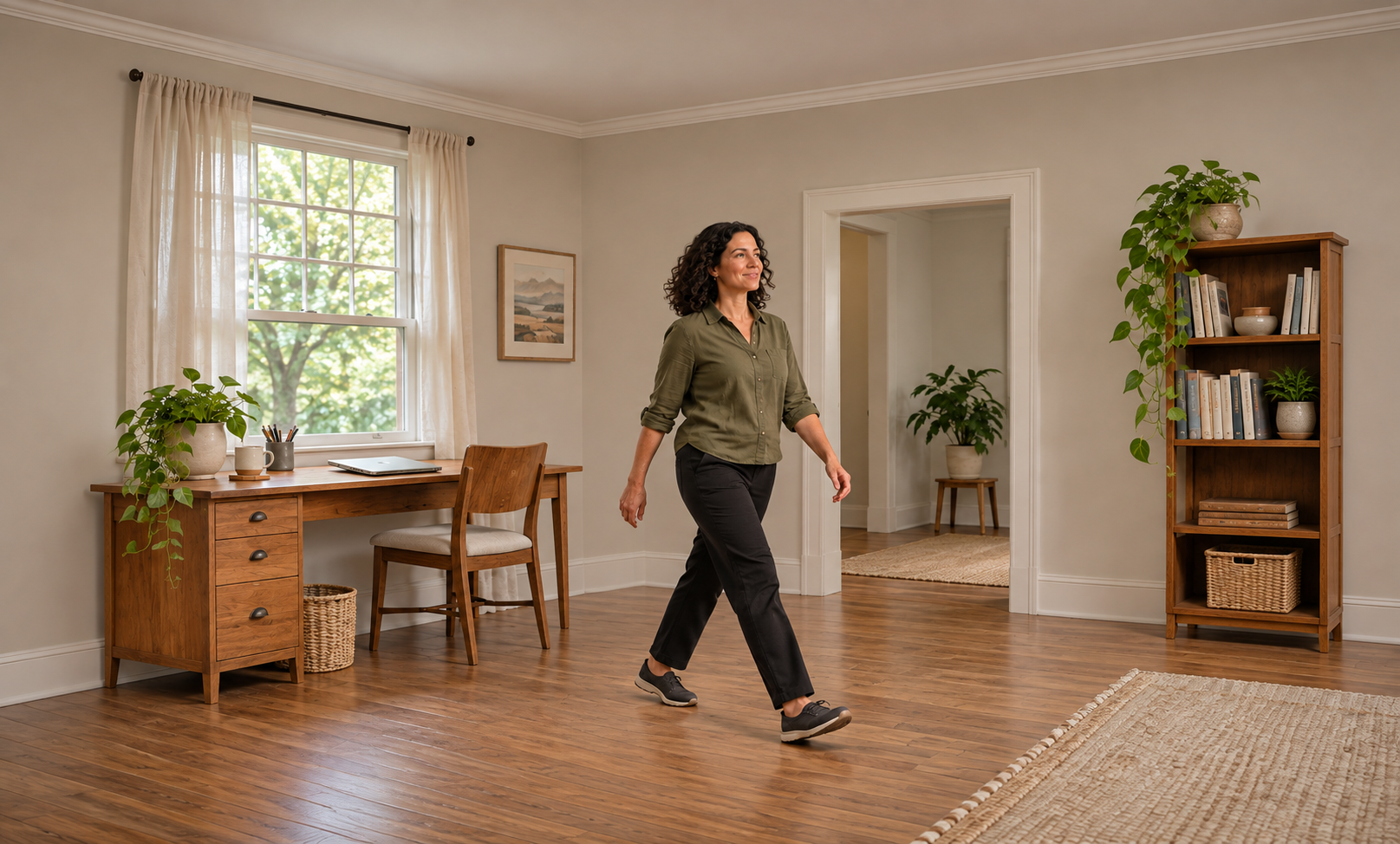
My coaching starting point is to keep the question practical: what is missing today? If you have been sitting through task after task, getting up for a comfortable walk is a reasonable place to start. If you are trying to replace a strength session, that is a different decision.
You do not need to call a break a workout for it to be worth taking. You also do not need to turn every spare minute into a hard effort.
What experts mean by exercise snacks
In Stanford Lifestyle Medicine's explanation, Marily Oppezzo describes exercise snacks as short bouts that raise the heart rate to a vigorous level. She distinguishes them from a leisurely walking break.
Cleveland Clinic's guide with exercise physiologist Katie Lawton also emphasizes brief vigorous activity. The two explanations use different time ranges. That is a useful reminder: there is no single duration that makes every activity an exercise snack.
Read past the headline
When you see a claim about exercise snacks, ask what people actually did. A hard stair-climbing effort, a resistance exercise and an easy walk are different activities. Sharing a short duration does not make their effects interchangeable.
This guide explains the distinction. It does not prescribe sprinting, maximal-effort bursts or a new intense exercise routine.
Choose the next step in under a minute
I have been sitting and want a break
Choose a comfortable, familiar way to move in the space you have, such as walking along a clear route. The immediate job is to step away from uninterrupted sitting. No equipment, workout label or personal record is needed.
Keep the expectation honest: An easy break does not automatically become vigorous exercise because it lasts two minutes.
I want to add activity across the day
Look at the kind of activity and its effort, not just how many breaks you took. The CDC says aerobic activity can be accumulated in smaller chunks. That does not mean every easy break meets the same intensity requirement.
Keep what already works: Your regular walks or classes can remain in place. Brief opportunities to move do not have to compete with them.
I am wondering whether this replaces my strength session
Keep the planned session separate unless your program deliberately provides a different structure. A few scattered movements do not tell you which muscles you trained, what work you completed or how it fits your plan.
Ask a specific question: "Which part of my strength plan would this replace?" If there is no clear answer, treat the break as an addition.
Short activity still belongs in a bigger week
The CDC's adult activity guidance recommends at least 150 minutes of moderate aerobic activity or 75 minutes of vigorous activity weekly, or an equivalent combination. It also recommends muscle-strengthening activity on at least two days, covering the major muscle groups.
The CDC explicitly allows smaller chunks of activity and says some activity is better than none. Those two ideas support a flexible week. They do not establish that an arbitrary number of short breaks replaces both aerobic activity and strength training.
If walking is already your anchor, the separate guide Is Walking Enough Exercise? looks at what walking covers and where strength fits. Keep the useful habit while checking the rest of the week.
For individual questions about whether vigorous activity is appropriate for you, ask a qualified clinician. If you already have exercise instructions, follow them rather than borrowing an intense protocol from a headline.
A short break can be useful without having to replace everything else.
Make the break easy to return to
Choose one ordinary transition, such as finishing a task or ending a call. Decide on a comfortable movement option in advance. This is a practical reminder strategy, not a research-backed optimal exercise-snack schedule.
Plan A: Take the break when that transition arrives and return to the next task.
Plan B: If the space or timing does not work, choose the next suitable opportunity. Keep the movement familiar and the route clear.
If you are interrupted: Stop safely and continue your day. You do not owe a harder effort later to compensate.
If you miss the whole day: Return to the cue tomorrow. Keep your regular training appointments on the calendar rather than declaring the week lost.
Track the decision, not a fitness promise
For a few days, note whether the break happened and whether it was easy to fit in. Keep a separate note of your planned workouts. This can show whether the reminder is practical; it does not measure a change in fitness or prove a health outcome.
If following through is the larger problem, read the guide to consistency and accountability. A reminder and a training plan solve different parts of the week.
Have a block of time for a workout?
That is the next decision. Once you have time for a planned session, choose its length around what you want to accomplish. The workout-duration guide helps you make that choice without turning a brief break into a substitute for the whole plan.
Read the Workout Duration GuideFrequently asked questions
What are exercise snacks?
The term commonly describes brief bouts of exercise spread through the day. The expert sources cited here emphasize vigorous effort. An easy movement break can still be worthwhile, but duration alone does not make it the same activity.
Does a short walk count as an exercise snack?
People use the phrase loosely. A comfortable walk is a movement break; whether it contributes moderate or vigorous aerobic activity depends on its intensity. Do not apply findings about hard exercise bursts to every short walk.
Can exercise snacks replace strength workouts?
Do not assume they replace your strength plan. The label does not tell you which muscles worked or what training was completed. Keep your planned strength sessions unless your program or coach deliberately provides another structure.
How often should I take an exercise snack?
There is no universal schedule established by the sources in this guide. For an ordinary movement break, choose a natural transition that you can repeat. This article does not prescribe a vigorous exercise-snack protocol.