How Long Should You Work Out? Choose the Shortest Session That Does the Job
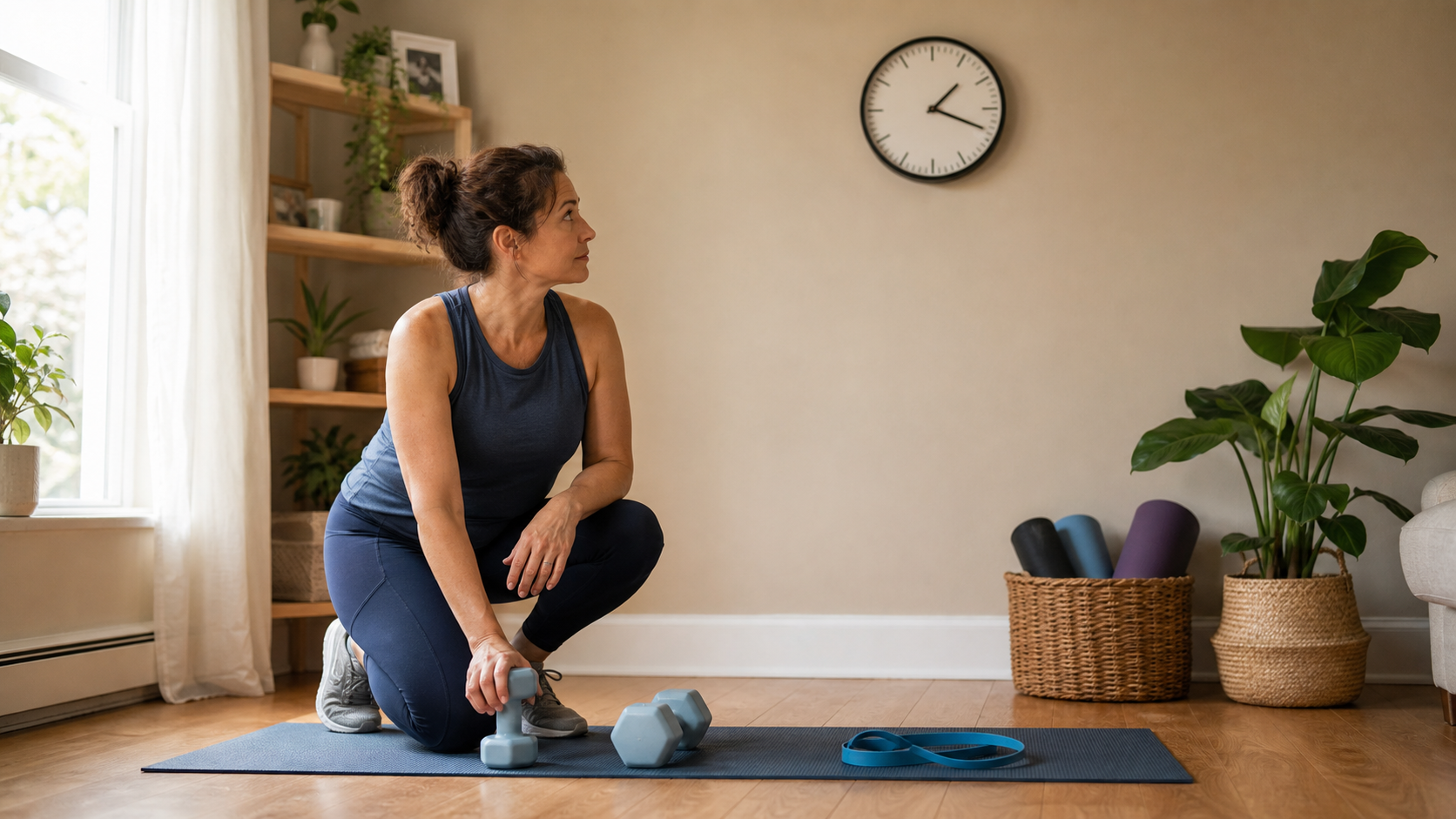
I hear the same question from people trying to build a routine around work, family, and everything else: How long should a workout be if I want it to count?
The honest answer is not a magic number. It depends on what the session needs to accomplish, how much time you truly have, what else you are doing this week, and whether the plan is repeatable.
A focused 15 minute session can be useful. Thirty minutes can hold a complete home workout. Forty five minutes can give you room for more sets, a second training focus, or longer practice. None of those lengths is automatically better. The right one is the shortest session that completes today's job without stealing from the rest of your week.
The Short Answer
Choose your workout length in this order:
- Name the main job of the session.
- Look at the time you honestly have, including setup and transition time.
- Choose the shortest format that can complete that job with control.
- Leave enough room to recover and return for the next planned session.
This keeps duration from becoming a test of commitment. A workout does not become effective because the clock crossed an impressive number. It becomes useful when the work matches your current ability and supports a week you can repeat.
Choose 15, 30, or 45 Minutes
These are not rigid prescriptions. They are planning containers. Start with the time you can protect, then put the right amount of work inside it.
15 Minutes: Focus
Choose 15 minutes when the alternative is likely to be skipping the day or when one movement skill needs attention.
Best use: A short full-body circuit, a focused strength block, mobility, or brief cardio intervals appropriate for your current level.
30 Minutes: Complete
Choose 30 minutes when you want a brief warmup, a focused main block, and a short finish without rushing.
Best use: A full-body home strength session, steady cardio, or a balanced strength and cardio workout.
45 Minutes: Build
Choose 45 minutes when the extra time has a clear purpose and fits the week without crowding out recovery.
Best use: More strength sets, a combined session, or extra practice on movements you are learning.
If you only have 15 minutes, our 20 minute Tabata workout can show you how a short session stays organized, but do not force a high-intensity format when it does not fit your current ability. If you have closer to 30 minutes, the 28 minute cardio and strength workout is one ready-made option.
Give Every Session One Main Job
Duration gets much easier to choose when the workout has a job. A vague goal like "exercise for a while" expands until it fills whatever time you give it. A clear job tells you when the session is complete.
Strength job
Train the main movement patterns planned for the day with controlled repetitions. In a short session, use fewer exercises or sets. Do not rush the movements to preserve a longer list.
Cardio job
Complete the planned easy, moderate, or interval work at an effort that fits your current capacity. A short cardio session can stand alone or support a larger weekly total.
Practice job
Use the time to improve control, range, balance, or comfort with a small number of movements. Practice does not have to leave you exhausted to be productive.
The CDC's adult activity guidance recommends at least 150 minutes of moderate activity each week, or the vigorous equivalent, plus muscle-strengthening activity on at least two days. It also explains that activity can be spread across the week and broken into smaller chunks. That is the important context: one workout does not have to carry the entire week.
The goal is not to make every workout complete everything. The goal is to make the week complete what matters.
Use the Busy Day Rule
Your schedule will change. The duration decision needs a smaller version before that happens.
Plan A: Complete the chosen session
Use the full 15, 30, or 45 minute format you planned. Keep the warmup and main job clear so the workout starts without a long decision process.
Plan B: Remove optional work
If 45 minutes becomes 30, keep the main movement or training block and remove accessories or the second focus. If 30 becomes 15, choose one controlled block that still matches the day's purpose.
The rescue option: Protect the next step
If the day collapses, do a few minutes of simple movement or prepare the space and plan for the next session. One disrupted day is not a reason to cram two workouts together or abandon the week.
A shorter session is not permission to rush. Keep the movements controlled, use versions that fit your current experience, and stop if you feel sharp, worsening, or unusual pain. If a health condition affects training, get guidance from an appropriate qualified professional.
Fit the Session Into the Week
The same workout length can be right for one week and wrong for another. Three 30 minute sessions may fit better than two 45 minute sessions. Two focused strength days plus walking may be the right starting point. Four shorter sessions may work for someone experienced who prefers a divided plan.
Choose weekly frequency separately from session length. The guide to how many days a week to strength train helps you make that decision without repeating it here.
- Start with the week: Decide how many sessions you can protect.
- Assign each session a job: Strength, cardio, practice, or recovery work.
- Choose the time container: Use 15, 30, or 45 minutes based on the job and the day.
- Track completion and control: Do not use exhaustion as the score.
- Add time only when needed: More time should solve a specific problem.
If you are completely new to home training, start with the first 30 days beginner guide. It gives you a fixed progression so you do not have to invent every session from scratch.
Your progress measures should fit the job. For strength, track completed sessions, exercise control, repetitions, and resistance. For cardio, track time, distance, or a repeatable effort. For the whole plan, track whether you can complete it and still return for the next week.
Turn Your Time Into a Real Week
The Free Stronger Week Quick Start gives you one short strength workout, a simple weekly plan, and a backup for the days your schedule changes.
Get the Free Quick StartNo credit card. No commitment. One short workout and a plan you can actually use.
Workout Duration FAQ
It can be. Give it one clear job and keep the work focused. A 15 minute session does not need to include every kind of training you need for the week.
For many home workouts, yes. Thirty minutes can hold a brief warmup, a focused strength or cardio block, and a short finish without rushing.
Only when the extra 15 minutes has a purpose. More controlled sets, a second training focus, or needed practice can justify it. Random extra exercises do not.
Choose enough time to practice a small number of movements with control and little enough time that you can repeat the plan. A focused 15 to 30 minute home session is often a practical starting point.
Keep the main job and remove optional work. Do not rush exercise form to force the original session into a smaller window.