Meal Prep for Beginners: How to Start, What to Cook, and How to Make It Last
Why Meal Prep Actually Works
Meal prep is not about being a gourmet chef or spending your entire Sunday in the kitchen. It is about removing the daily decision of what to eat. When that decision is already made and the food is already cooked, you eat what you prepped. When it is not, you eat whatever is fastest and easiest. And fastest and easiest is almost never the healthy option.
Every food decision you make during the day costs mental energy. By the time dinner rolls around, most people have burned through their decision making capacity. Researchers call this decision fatigue, and it is one of the biggest reasons people reach for junk food at night even when they know better. Meal prep moves all of those decisions to one focused block of time when you are thinking clearly and not starving.
The data backs this up. People who prep their meals consistently eat significantly more vegetables, less processed food, and better portions than those who wing it day to day. They also tend to lose weight without actively dieting, simply because they are making rational food choices once per week instead of emotional choices multiple times per day.
I tell my clients all the time: you do not need more discipline. You need a system. Meal prep is that system.
Three Styles of Meal Prep
There is no single right way to do this. The best method is the one you will actually stick with. Here are the three main approaches, and you can mix and match based on your schedule.
Batch Cooking
You cook large portions of complete meals and divide them into containers for the week. Think of it like cooking dinner five times all at once. This is the most time efficient method because you cook once and eat all week. The trade off is less variety day to day, which some people love and others get bored with.
Ingredient Prep
Instead of cooking full meals, you prep the building blocks: cook your proteins, roast your vegetables, prepare your grains, and make your sauces. Then you mix and match throughout the week to create different meals from the same base ingredients. This gives you the most flexibility and keeps things from getting repetitive.
Freezer Prep
You prepare meals that freeze well (soups, stews, casseroles, marinated proteins) and store them for weeks or even months. This is ideal for people who want to prep less frequently or who want a backup stash for the weeks when life gets chaotic. A few hours once or twice a month can fill your freezer with 20+ meals.
If you are brand new to this, start with ingredient prep. It is the most forgiving method because nothing goes to waste if your plans change mid week. You just recombine the ingredients differently.
Getting Started: What You Need
You do not need a fancy kitchen or expensive equipment. Here is the bare minimum to start prepping this week.
Glass Containers
Get a set of glass meal prep containers with snap lids. Glass reheats better than plastic, does not stain, and lasts longer. A set of 10 to 12 containers in two sizes will cover most people.
Sheet Pans
Two large sheet pans let you roast proteins and vegetables at the same time. Sheet pan cooking is the easiest way to prep large quantities with minimal effort and cleanup.
A Sharp Knife
A dull knife makes prep miserable. One good chef's knife that you keep sharp will cut your prep time dramatically and make the whole process feel less like a chore.
A Rice Cooker or Instant Pot
Optional but a game changer. Set it and forget it while you focus on everything else. Rice, quinoa, and even steamed vegetables can run in the background while you handle proteins and chopping.
The Formula: How to Build a Prep
Do not overthink this. Every meal prep follows the same basic formula. Pick from each category and you will have balanced, satisfying meals all week.
Pick 2 Proteins
Choose two proteins that cook differently so you get variety. For example: chicken thighs (oven roasted) and ground turkey (skillet). Other solid options include salmon, shrimp, lean ground beef, tofu, or eggs. Cook them with simple seasoning. Salt, pepper, garlic powder, and a good olive oil go a long way. You can change the flavor profile when you assemble meals by swapping sauces and spices.
Pick 2 Carb Sources
Rice, sweet potatoes, quinoa, regular potatoes, or whole grain pasta. Cook a large batch of two options and portion them out. These are your fuel sources and they keep you from reaching for bread, chips, or crackers when you need energy.
Pick 3 to 4 Vegetables
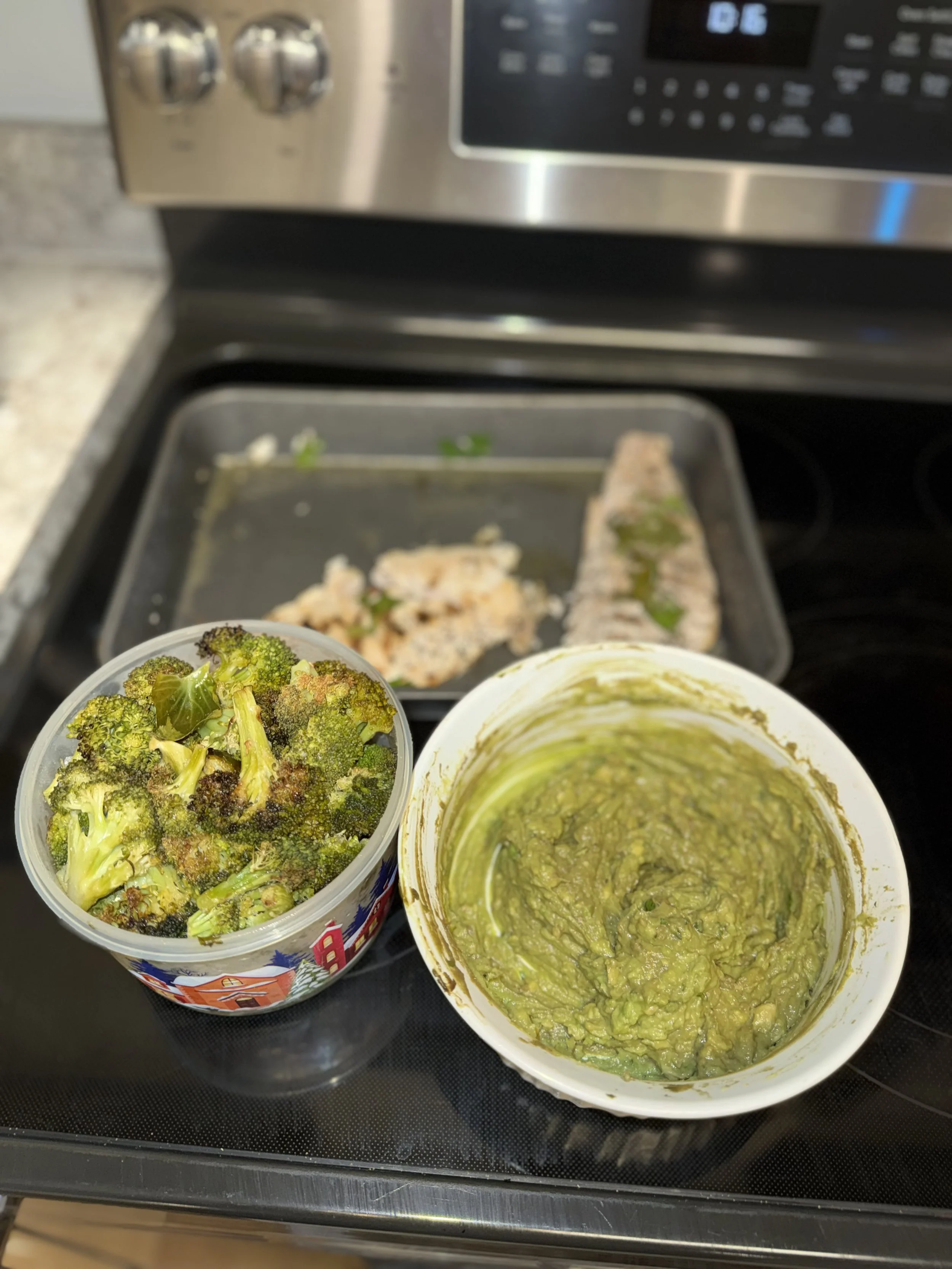
Roasted vegetables are the easiest to prep in bulk. Broccoli, bell peppers, zucchini, asparagus, Brussels sprouts, and sweet potatoes all roast beautifully on a sheet pan. Toss them in olive oil, season with salt and pepper, and roast at 400 degrees for 20 to 25 minutes. Keep raw vegetables like cucumbers, cherry tomatoes, and spinach separate to add freshness to meals during the week.
Pick 2 to 3 Sauces or Seasonings
This is where most people fail at meal prep. They cook bland food and then do not want to eat it. Sauces transform the same chicken and rice into completely different meals. A few to keep on hand: salsa, tahini, soy sauce with ginger and garlic, a simple vinaigrette, hot sauce, or pesto. Rotate sauces throughout the week and the same base ingredients will never feel repetitive.
Same ingredients, different sauces. That is the entire secret to meal prep that does not get boring by Wednesday.
A Sample Prep Week
Here is what a real beginner prep day looks like. Total time: about 90 minutes to 2 hours on a Sunday afternoon.
Prep Day Lineup
Proteins: Oven roasted chicken thighs seasoned with paprika, garlic, salt, and pepper. Skillet ground turkey with onions and taco seasoning.
Carbs: A large pot of jasmine rice. A tray of cubed sweet potatoes roasted alongside the chicken.
Vegetables: Sheet pan broccoli and bell peppers. A container of raw spinach. Sliced cucumbers and cherry tomatoes for sides.
Sauces: Store bought salsa. A quick lemon tahini dressing (tahini, lemon juice, garlic, water, salt). Hot sauce.
How That Becomes 5 Days of Meals
Monday: Chicken thigh over rice with roasted broccoli and tahini dressing.
Tuesday: Ground turkey taco bowl with rice, salsa, and sliced peppers.
Wednesday: Chicken over sweet potatoes with spinach salad and lemon dressing.
Thursday: Turkey and roasted vegetables over rice with hot sauce.
Friday: Chicken and sweet potato bowl with remaining vegetables, salsa, and whatever sauce you want.
Two proteins, two carbs, a few vegetables, three sauces. Five completely different feeling meals from one prep session. That is the power of ingredient prep.
Storage and Shelf Life
Proper storage is what separates meal prep that lasts all week from food that goes bad by Thursday.
Cooked Proteins
3 to 4 days in the refrigerator. If you are prepping for 5+ days, freeze the last two days worth and move them to the fridge the night before.
Cooked Grains
4 to 5 days refrigerated. Rice, quinoa, and potatoes all hold up well. Store them in airtight containers and they will reheat perfectly.
Roasted Vegetables
3 to 4 days refrigerated. They soften slightly but still taste good. Keep raw vegetables separate and add them fresh when you assemble the meal.
Sauces and Dressings
Store separately from the meal to prevent sogginess. Most homemade dressings last a full week. Add the sauce right before eating.
Common Mistakes to Avoid
Training and Nutrition Together
Meal prep handles the nutrition side. I handle the training. Join Siwicki Fitness for live virtual classes, on demand workouts, and a coach who keeps you accountable on both sides of the equation.
Start Your Free TrialKeep Reading