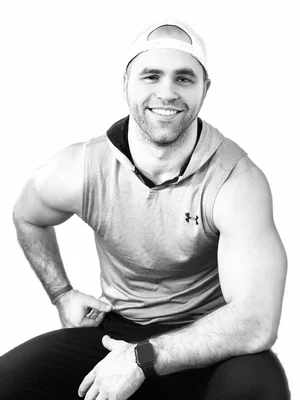
How to Breathe During Exercise: The Technique That Changes Everything
Most people never think about how they breathe during a workout. I did not either, until I realized it was quietly costing me my football career.
The Thing I Got Wrong in Football
Throughout my football career, my breathing was off. I knew something was wrong but I kept focusing on everything else: footwork, speed, strength. Instead of addressing it directly. My breathing was short, sharp bursts at full speed. All upper chest. No control.
I believe that is exactly why I was great at short distance sprints, 10 to 20 yards, and then fell apart past 20. The moment a play went longer, I was done. Gassed. And I could never figure out why I trained so hard but could not sustain it when it counted.
Looking back, I genuinely believe my football career was cut short because of breathing technique. Not strength. Not speed. Breathing.
Short, intense breathing causes you to inhale more carbon dioxide than oxygen. That constricts your blood vessels, tires you out fast, and can make you feel dizzy. You can be in great shape and completely undermine it by breathing wrong.
I am not going to let that happen to the people I train. So here is exactly what you need to know.
Why Breathing Technique Actually Matters
Your lungs move about half a liter of air with each relaxed breath. During vigorous exercise that jumps to 3 liters. When you breathe right, your red blood cells drop off carbon dioxide and pick up oxygen efficiently. When you breathe wrong, that process breaks down and your performance tanks with it.
The primary driver of almost all breathing is not a need for more oxygen. It is a need to remove carbon dioxide. When you exercise, CO2 builds up in your blood and your breathing rate increases to flush it out. Short, shallow chest breathing cannot do that job. Diaphragmatic breathing, breathing from your belly, can.
Start Here: Everyday Breathing
Before you can fix your breathing during workouts, you need to fix it outside of them. Most people breathe from their upper chest all day without realizing it. The motion should be in your lower ribs and belly, not your shoulders.
How to Check Your Breathing Right Now
Place one hand on your belly and one on your chest. Take a normal breath. If your chest hand moves first, you are breathing wrong. Your belly hand should rise first as your diaphragm drops down and pulls air into the bottom of your lungs. Practice this for two minutes every morning until it becomes automatic. It will feel strange at first. That is normal.
How to Breathe During Strength Training
This one has a simple rule that applies to almost every movement: breathe in on the way down, breathe out on the way up.
Inhale on the Eccentric, Exhale on the Concentric
Eccentric means the lowering phase, the part where the muscle lengthens under load. Concentric means the pushing or pulling phase, the part where you are working against resistance. Inhale through your nose on the way down, exhale through your mouth on the way up. For a push-up: breathe in as you lower to the floor, breathe out as you push back up. For a squat: breathe in on the way down, breathe out as you stand. Apply that pattern to every movement and your breathing becomes a tool instead of an afterthought.
Never hold your breath during a heavy lift. Holding your breath spikes blood pressure and robs your muscles of oxygen at the exact moment they need it most.
How to Breathe During Cardio
This is the one that matters most and the one most people get most wrong. During cardio, especially HIIT, the goal is to stay as calm as possible while breathing as efficiently as possible. That sounds simple. It is not easy.
Belly Fill, Full Exhale
Breathe in through your nose, filling your belly first and then expanding your lungs as much as possible. Breathe out through your mouth, squeezing the lungs as fully as you can by contracting your belly. Long, controlled exhales remove more carbon dioxide than short shallow ones and directly reduce your perceived effort. Practice this before the workout starts. Once I am calling "HIT HIT HIT" during a class, it is very hard to think about anything, so it needs to already be a habit.
The brides and members I train who learn this technique first always perform better. Not because they are more fit. Because they are not fighting themselves while they work out.
Want coaching that covers the details most trainers never mention? Try Siwicki Fitness free for a week. Live virtual classes, real feedback, a trainer who actually watches how you move.
Start Free WeekNo credit card. No commitment. Full access for 7 days.